
Why the choice feels more personal than expected
After a cremation, families face a decision that can seem simple until they begin making it: what should hold the ashes? The container may become part of a funeral, sit in a family home, be placed in a niche, or accompany a future scattering ceremony. It can also become a visible symbol of someone whose life cannot be reduced to a single object. That emotional weight is why choosing thoughtfully matters more than following a trend or selecting the first attractive design.
A good choice does not need to be expensive, elaborate, or perfectly symbolic. It needs to fit the practical plan and feel honest to the person being remembered. Families often find clarity by considering the individual first and the product second. Favorite places, daily routines, cultural background, personal taste, and the way the family wants to gather can all guide the decision without turning it into a test of love.
Begin with the memorial plan
Before comparing colors or materials, decide what will happen after the urn arrives. Will it be displayed at a service, kept at home, placed in a columbarium, buried, divided among relatives, or used temporarily before scattering? Each plan creates different requirements. A permanent home display calls for durability and a design that feels comfortable in the room. Burial may require a protective vault depending on cemetery rules. A niche has strict interior dimensions that should be confirmed in writing.
Plans can also change. A family may hold ashes for months while relatives arrange travel, or keep a portion after a scattering ceremony. If the final decision is not settled, choose a secure, adaptable vessel and avoid irreversible personalization. It is reasonable to pause. Funeral decisions are often made during exhaustion, and a temporary container can give everyone time to make a calmer, more lasting choice.
Use personality as a filter, not a theme
Personalization works best when it feels natural. Someone who loved quiet mornings in the garden may be suited to warm wood, botanical engraving, or a muted ceramic finish. A person known for modern taste may be better represented by clean metal lines and a simple inscription. Military service, faith, heritage, music, travel, and craftsmanship can inspire details, but every interest does not need to appear on one vessel.
Think of the selection as editing a meaningful portrait. Choose one or two qualities that family members immediately recognize. Restraint often produces a more timeless result than a heavily themed design. Photographs, flowers, favorite objects, and music can carry other parts of the story during the memorial, allowing the urn itself to remain dignified and versatile.
Understand the main materials
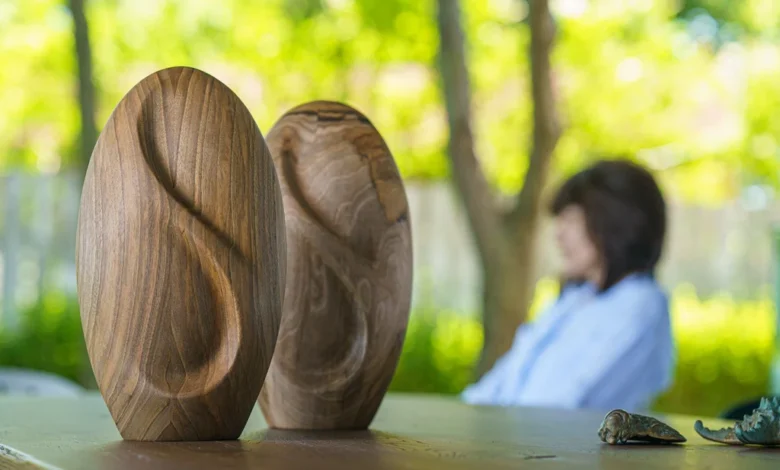
Material affects appearance, weight, durability, price, and where the memorial can be kept. Metal is widely used because it is strong and available in finishes ranging from traditional brass tones to contemporary matte colors. Wood offers warmth and natural variation; no two pieces of grain are exactly alike. Ceramic and porcelain can feel artistic and intimate, although they require careful handling. Stone is substantial and durable but may be heavy for travel or elevated shelving.
Biodegradable options serve a different purpose. They are designed for earth or water ceremonies and should be selected according to the intended setting, local rules, and the manufacturer’s instructions. Some dissolve quickly in water, while others break down gradually in soil. The most appropriate material is therefore not the one that is universally ‘best,’ but the one whose behavior matches the family’s actual plan.
Confirm capacity and dimensions
Exterior appearance can distract from the most important specification: usable capacity. Adult memorial vessels are commonly selected using a general planning rule of roughly one cubic inch of capacity for each pound of body weight before cremation. This is a guideline rather than a substitute for the crematory’s recommendation, because processing methods and other factors can affect the final volume.
Ask the crematory whether the ashes will remain in a sealed plastic bag inside the vessel and whether staff will transfer them. Then verify both internal capacity and exterior dimensions. If the piece must fit a niche, cabinet, travel case, or shared shelf, measure height, width, and depth with room for the lid and any decorative projection. When uncertain, a slightly larger capacity is usually more practical than an exact, tight fit.
Consider one full-size vessel or several keepsakes
Not every family wants the ashes to remain in one place. Small keepsake vessels can allow siblings, adult children, or close relatives to maintain individual memorials. Some families pair a primary vessel with several miniatures; others divide only a symbolic portion and scatter or inter the rest. Jewelry designed for a tiny amount of ashes is another option, although it should be chosen only when the wearer is comfortable with that intimacy.
Discuss division openly before ordering personalized pieces. Different relatives may have different beliefs about whether ashes should remain together. There is no need to force agreement about emotion or ritual, but the family does need a clear plan for consent, transfer, labeling, and safe handling. A funeral director or crematory professional can explain practical options without taking sides.
Shop with both emotion and evidence
Online selection gives families privacy and a wider range of styles, but product details deserve careful attention. Compare listed capacity, exact measurements, closure type, material, personalization limits, production time, and return policy. Photographs should show the lid, base, and scale as well as the decorative front. Reviews can reveal packaging or finish issues, but specifications and written policies matter more than a single opinion.
A broad collection of urns can help a family compare traditional, modern, religious, military, keepsake, and biodegradable options in one place. When comparing sellers, look for reachable customer support and clear shipping information. If a service date is near, confirm the delivery estimate before ordering engraving, because customized products often require additional processing and may not be returnable.
Choose words that will still feel right later
An inscription does not have to summarize an entire life. A name, dates, and one short line are often enough. Nicknames can feel warmer than formal names when that is how everyone knew the person. Religious passages, military ranks, family roles, or a familiar phrase may add meaning, but check spelling, punctuation, dates, and capitalization with another relative before approving the proof.
Consider how the words will read years from now and who may inherit the memorial. Very private humor or a message tied only to the immediate moment may feel less suitable over time. If the family cannot agree, keep the vessel simple and place longer messages in a memorial book, letter, digital tribute, or engraved plaque that can be updated separately.
Plan a respectful place at home
A home memorial should feel integrated rather than precarious. Select a stable surface away from busy edges, direct sunlight, moisture, fireplaces, and areas where children or pets could knock the vessel over. Heavy pieces require shelving that can support the weight. Delicate ceramic or glass designs may benefit from a cabinet or low-profile museum putty, provided the material and finish are compatible.
The surrounding display can be modest: a photograph, a small plant, a candle used only under supervision, or an object associated with the person’s life. Leave visual space around the vessel so the arrangement does not become cluttered. Families can also rotate photographs or flowers on meaningful dates, allowing the memorial to change gently while the central object remains constant.
Make room for different kinds of grief
One relative may want the vessel visible every day, while another may find that painful. Neither response is wrong. If family members share a home, choose a location and level of visibility everyone can tolerate. A private room, closed cabinet, or dedicated shelf may be a workable compromise. Decisions can be revisited as grief changes; moving a memorial is not a sign that someone has been forgotten.
The most meaningful choice is rarely the one that impresses outsiders. It is the one that supports the living while treating the deceased with care. By starting with the memorial plan, checking practical details, and using personality as a gentle guide, families can select a vessel that feels less like a purchase and more like a lasting act of remembrance.